Fez is Morocco’s spiritual and cultural capital, and its ancient medina (Fes el-Bali) is the largest car-free urban zone in the world—a living labyrinth of 9,000+ streets, historic madrasas, and centuries-old craft traditions. This Fez Medina travel 2026 Guide cuts through the noise, giving you a definitive, actionable plan for navigating the medina with confidence, avoiding the classic tourist traps, and experiencing the city like a seasoned traveler.
Quick Answer: The Fez Medina (Fes el-Bali) is a UNESCO World Heritage site and the world’s largest car-free urban zone. This 2026 guide provides a practical plan for navigating its 9,000+ streets, including self-guided walking routes, cultural etiquette, and tips for avoiding tourist traps.
Key Takeaways
- The Fez Medina (Fes el-Bali) is a UNESCO World Heritage site and the world’s largest car-free urban zone, offering an incomparable, authentic Moroccan experience.
- 2026 brings a mix of continued restoration and growing visitor numbers; plan your trip for early morning or late afternoon to avoid peak crowds.
- Stay inside the medina for immersion, but be prepared for noise and limited direct access; outside the medina offers comfort and easy parking—choose based on your priorities.
- A self-guided walking route is the best way to see the highlights without paying for a full-day tour; use a reliable offline map and be ready to get lost.
- Bargaining is expected in the souqs, but it’s a respectful cultural exchange—start at 50% of the quoted price and aim for a fair middle ground.
The Complete Answer: What Is the Fez Medina and Why Visit in 2026?
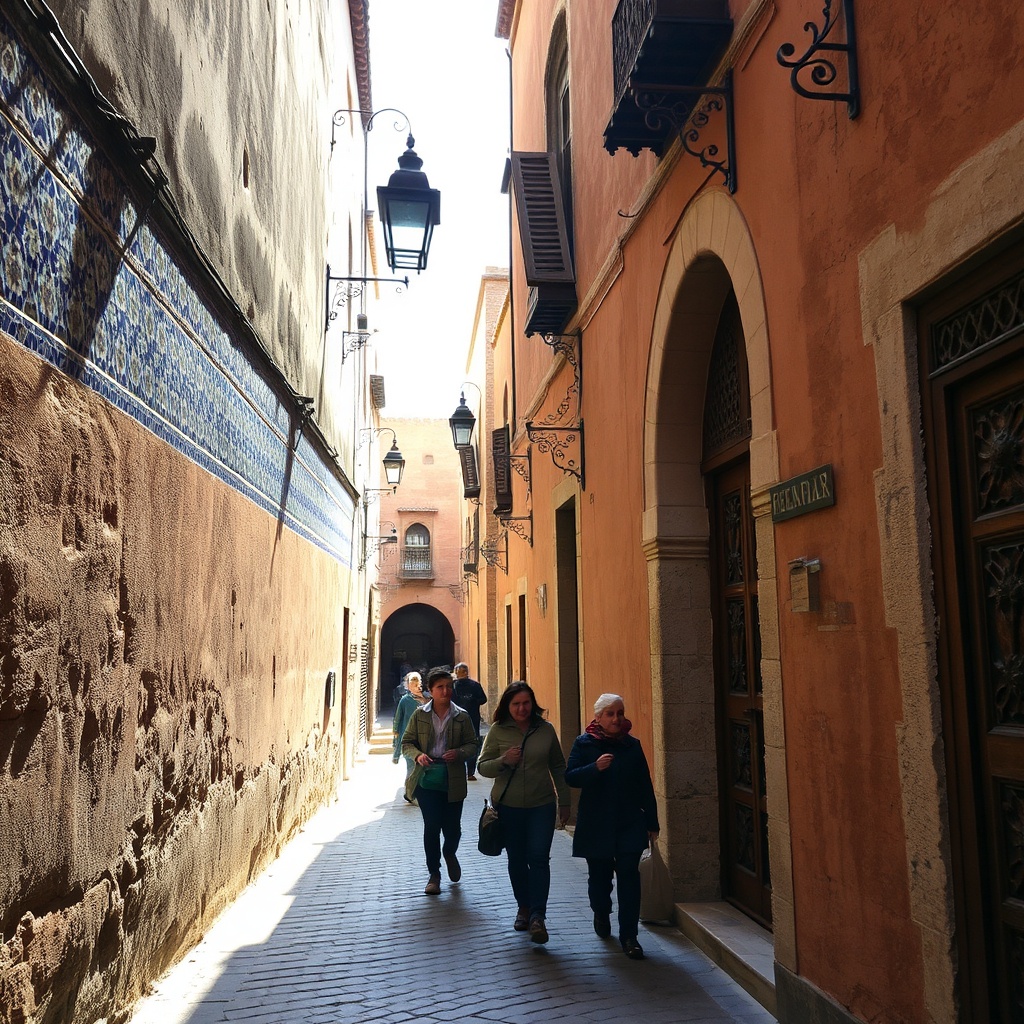
A sun-drenched, narrow alleyway showcasing the ancient walled city’s distinctive architecture and car-free charm, ideal for illustrating self-guided walking routes and historic navigation.
Fes el-Bali is a walled, medieval city founded in the 9th century and designated a UNESCO World Heritage site in 1981. It is not a museum or a theme park; it is a thriving residential and commercial center where people live, work, and worship exactly as they have for centuries.
Understanding the Fez Medina (Fes el-Bali)
The medina’s unique structure is its defining feature. There are no cars, no straight roads, and no grid system. Instead, a dense network of souqs (markets), residential quarters, and religious buildings crisscrosses the space in a seemingly random pattern. This labyrinthine design was intentional—it was built to confuse invaders and to create shaded, private communities. Today, it serves as a living museum of urban planning.
Definition: Fes el-Bali is the oldest walled district of Fez, founded in the 9th century. It is a UNESCO World Heritage site and the world’s largest contiguous car-free urban area, characterized by a dense labyrinth of narrow streets and historic architecture.
Several key landmarks anchor the medina and are essential for any visitor. The Bou Inania Madrasa is one of the few religious buildings open to non-Muslims, renowned for its intricate zellij tilework and carved cedar wood. The Al-Attarine Madrasa is smaller but equally stunning. The Chouara Tannery is the most famous of the city’s tanneries, where leather is processed using centuries-old methods. The Bab Boujloud (Blue Gate) is the most iconic entrance, with its striking blue and green ceramic façade. Finally, the Karaouiyine Mosque is one of the oldest continuously operating universities in the world, though non-Muslims cannot enter.
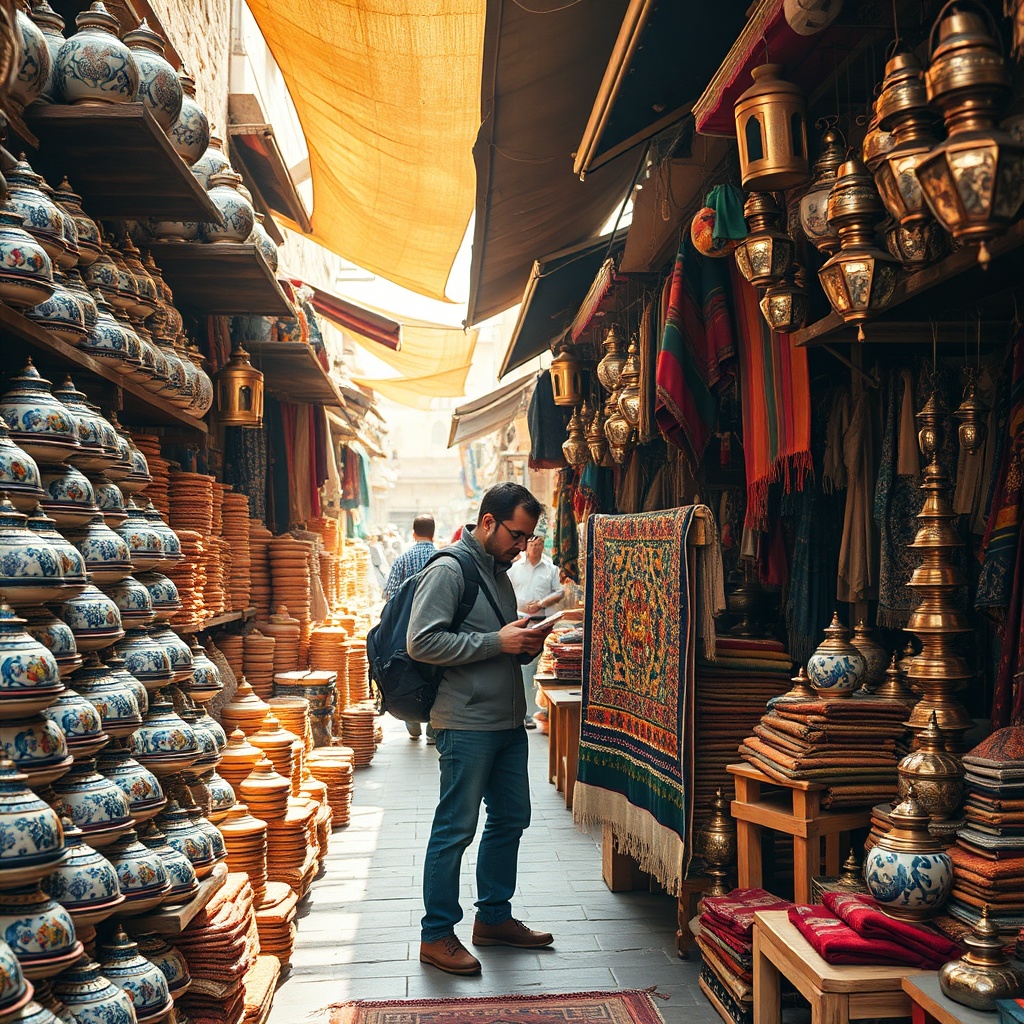
A dynamic marketplace scene highlighting traditional Moroccan crafts and cultural interactions, perfect for illustrating bargaining etiquette and immersive market exploration.
Why 2026 Is a Unique Year to Visit
The broader travel context for 2026 is favorable for Morocco. Flight connectivity continues to improve, with more direct routes from major European and North American hubs. There is also a growing global emphasis on sustainable tourism, and Fez is at the heart of this movement. The medina itself is a model of sustainable urbanism—a car-free, pedestrian-first environment that predates modern urban planning by a millennium.
While specific 2026 events or new visitor regulations are subject to change and should be verified with official tourism sources closer to your departure date, the experience of the medina continues to evolve. Improved signage and the widespread availability of digital offline maps have made self-guided exploration far more accessible than it was a decade ago. The key is to plan your visit to master Beating the Heat in Fes online and peak tour group times.
Who Should Visit and Who Should Skip It
The Fez Medina is an immersive, raw, and deeply authentic experience. It is ideal for history lovers, photographers, foodies, and travelers who enjoy getting lost in non-curated environments. If you want to see a city that has not been sanitized for tourism, Fez will reward you.
However, it is not for everyone. The streets are unpaved, uneven, and full of stairs. This can be a significant challenge for travelers with mobility issues. The crowds in the main souqs can be intense, and the noise—from the constant hum of commerce to the early morning call to prayer—is a constant presence. If you are seeking a relaxed, beach-style holiday or a clean, easy-to-navigate city, you should skip Fez. If you want raw, immersive history, this is it.
Planning Your 2026 Fez Medina Trip: Logistics and Entry Points
Planning your logistics is the key to a smooth trip. Understanding how to get to Fez, where to stay, and how to enter the medina will save you hours of confusion.
Getting to Fez: Airport, Train, and Bus Options
Reaching Fez is straightforward, with several options depending on your budget and starting point.
- Air: Fès–Saïss Airport (FEZ) is located about 15 km from the medina. A taxi is the most direct option, and the journey takes around 20-30 minutes depending on traffic. Always agree on the fare before you get in the car.
- Train: ONCF trains connect Fez with Casablanca, Rabat, and Tangier. The new high-speed line (Al Boraq) connects Tangier to Casablanca, but Fez is on a separate, standard line. You will need to take a A Comprehensive Guide to Traveling from Casablanca to Fez: Transfers, Tips, and Recommendations or a connecting service from Tangier. The train station is located in the Ville Nouvelle, about a 15-minute taxi ride from the medina.
- Bus: CTM and Supratours offer budget-friendly alternatives to the train. The stations are also in the Ville Nouvelle, so you will need a taxi to reach the medina gates.
Where to Stay: Inside vs. Outside the Medina
The choice of where to stay is one of the most important decisions you’ll make. It fundamentally shapes your experience of the city.
| Factor | Inside the Medina (Riad) | Outside the Medina (Ville Nouvelle) |
|---|---|---|
| Atmosphere | Authentic, historic, courtyard-centric | Modern, quiet, less character |
| Access | Walk only; porter service for luggage | Direct car/taxi access to hotel |
| Noise | High (street sounds, early calls to prayer) | Low |
| Price | Varies widely; can be very affordable or high-end | Generally more predictable |
| Convenience | Steps from the souqs and sights | Requires taxi for every medina visit |
| Best for | Immersion lovers, photographers, return visitors | Families, business travelers, those with mobility issues |
Staying inside the medina in a traditional riad—a house built around a central courtyard—is the most atmospheric option. The trade-off is that you cannot drive to the door. You will need to park outside the gates and hire a porter with a handcart to transport your luggage through the narrow streets. Staying in the Ville Nouvelle offers modern comfort and easy access by car, but you will rely on taxis for every trip into the medina.
Quick Answer: For a fully immersive experience, stay in a riad inside the medina and hire a porter for your luggage. If you prefer modern comfort and easy car access, stay in a hotel in the Ville Nouvelle and take a short taxi ride to the medina gates.
Navigating the Gates and Main Entrances
The medina has several main gates, each with a strategic purpose.
- Bab Boujloud (Blue Gate): This is the most famous entrance, leading directly into the main souq (Talaa Kebira). It is the best starting point for a first visit.
- Bab Guissa: Located in the north, this gate is a convenient entry point if you are staying in the northern part of the medina.
- Bab Ftouh: This southern gate is the closest to the Chouara Tannery and the Mellah (Jewish quarter).
- Bab el-Mellah: This gate provides direct access to the Jewish quarter.
Step-by-step for entering the medina for the first time:
- Choose your gate based on your starting point (your hotel or taxi drop-off).
- Download an offline map (e.g., Maps.me or OsmAnd) and mark your hotel’s location.
- Walk with confidence—don’t stop at the first shop that calls you.
- Keep your phone charged and carry a small flashlight for the darker alleys.
- Ask a trusted local (like your riad host) to identify a nearby landmark to orient yourself.
The Ultimate Self-Guided Walking Route Through the Medina
A self-guided route is the best way to see the highlights at your own pace without paying for a full-day tour. This itinerary is designed to be spread over three days, allowing you to see the core landmarks, the craft quarters, and the hidden corners.
Day 1: The Core Landmarks
This day focuses on the main sights located along the primary commercial arteries of the medina.
- Enter via Bab Boujloud.
- Walk straight down the main souq, Talaa Kebira.
- Turn right at the sign for Bou Inania Madrasa and visit it (allow 30 minutes).
- Continue down the street to the Al-Attarine Madrasa (allow 15 minutes).
- Pass the Karaouiyine Mosque (view from the outside).
- Find the Nejjarine Museum of Wooden Arts and Crafts.
- Climb to the museum’s rooftop for a panoramic view of the medina.
Day 2: The Craft Quarters and Tannery
This day is about witnessing the living crafts that have defined Fez for centuries.
- Visit the Chouara Tannery, best viewed from the surrounding leather shops’ terraces. Expect to be offered a sprig of mint to mask the strong smell, and a tip for the guide who shows you around.
- Explore the leather souq where the finished goods are sold.
- Walk through the coppersmiths’ quarter to see artisans hammering out metalware.
- Observe the dye pits from a terrace. The process is ancient: hides are soaked in a mixture of pigeon droppings and lime to soften them, then dyed with natural pigments like saffron, indigo, and poppy.
Day 3: The Hidden Corners and Local Life
This day is for slowing down and experiencing the medina as a living community.
- Wander into the residential quarters, such as the Andalusian quarter, to see everyday life away from the tourist crowds.
- Visit the Mellah, the old Jewish quarter, and see the Aben Danan Synagogue if it is open.
- End your day at a local hammam for a traditional bath experience. This is a deeply relaxing and authentic cultural ritual.
Fez Medina Culture, Etiquette, and Practical Tips for 2026
Respecting local customs and understanding social dynamics will make your visit far more enjoyable and rewarding.
Dress Code and Cultural Sensitivity
Modest clothing is recommended for both men and women, especially when entering religious sites. Shoulders and knees should be covered. This is a sign of respect and will often result in a warmer reception. Photography of locals requires permission; always ask before taking a picture, especially in the souqs and the tannery. Public displays of affection are frowned upon.
Handling Touts and Navigating the Souks
The most common nuisance in the medina is the « guide » tout. These individuals may offer to show you the way, claim your hotel is closed, or insist you need a guide. The best strategy is to politely decline and keep walking. A firm « Non, merci » is usually sufficient. Avoid engaging in conversation or making eye contact with persistent touts. Remember, getting lost is part of the experience. Use your map app to get your bearings, but don’t be afraid to wander.
Quick Answer: The Fez Medina is generally safe, but the biggest nuisance is the persistent touts. A firm « Non, merci » and continuing to walk without engaging is the most effective way to decline their offers.
Money, Tipping, and Bargaining
The currency is the Moroccan dirham (MAD). Cash is king in the medina, and while some larger shops accept cards, you should carry enough cash for your daily needs. ATMs are available in the Ville Nouvelle and near the main gates.
- Tipping: Not mandatory but appreciated. A 5-10% tip in cafés and restaurants is standard. For porters, a tip of 10-20 dirhams is appropriate. A small tip for guides is also expected.
- Bargaining: It is expected in the souqs. The process is a respectful cultural exchange, not a confrontation. Start at around 50% of the quoted price and aim to settle around 60-70%. Be polite, playful, and don’t be afraid to walk away if the price isn’t right.
What to Eat, Buy, and Experience in the Fez Medina
Fez is a feast for all the senses, and the culinary and craft traditions are among the richest in Morocco.
The Food Scene: Must-Try Dishes and Where to Find Them
Fez is famous for its food. You cannot leave without trying these iconic dishes.
- Tagine: A slow-cooked stew, often with meat, vegetables, and olives.
- Couscous: The traditional Friday lunch, steamed and served with vegetables and meat.
- Pastilla: A sweet and savory pie filled with pigeon or chicken, almonds, and cinnamon.
- Harira: A rich tomato and lentil soup, often eaten to break the fast during Ramadan.
- Msemen: A flaky, pan-fried flatbread, perfect for breakfast.
You can find excellent food stalls and small restaurants throughout the medina, particularly near Bab Boujloud and in the side alleys off Talaa Kebira. The food scene in 2026 also sees a growing number of modern cafés, where you can find a rooftop spot for a Choosing a good tea pot in Fes, Morocco products with a panoramic view.
Shopping Guide: Authentic Crafts vs. Tourist Traps
Fez is the heart of Moroccan craftsmanship. Knowing what to buy and what to avoid is essential.
- Authentic items: Handwoven carpets, leather goods (bags, belts, jackets), copperware, ceramics, and carved woodwork. These are made by artisans using traditional methods.
- Tourist traps: Mass-produced magnets, cheap « Berber » jewelry, and anything sold at a « special price » just for you. If the price is too low, it is likely not authentic. If the shop is too eager to bargain, be cautious.
Unique Experiences: Hammams, Music, and Night Walks
Beyond the sights, Fez offers unique experiences that will stay with you.
- Traditional hammam: A public bath is a quintessential Moroccan experience. Choose a local one for authenticity and bring your own soap, towel, and flip-flops.
- Live music: Sufi music performances are sometimes held at riads or cultural centers. Check with your accommodation for current schedules.
- Night walk: The medina is a different place after 9 PM. The crowds have thinned, and the lantern-lit alleys offer a quieter, more atmospheric experience.
Frequently Asked Questions (FAQ)
Is the Fez Medina safe for tourists in 2026?
The medina is generally safe, but pickpocketing can occur in crowded souqs. Keep valuables secure, avoid carrying large amounts of cash, and walk confidently. The biggest nuisance is the touts, not actual crime.
What is the best time of day to visit the Fez Medina?
Early morning (8–10 AM) and late afternoon (4–7 PM) offer the best light and fewer crowds. The midday heat and lunch rush can be intense, especially in summer.
How long should I spend in the Fez Medina?
Most travelers find 2–3 full days sufficient to see the major landmarks, do some shopping, and get a feel for daily life. One day is too rushed; a week is for deep immersion.
Do I need a guide to explore the Fez Medina?
No, a self-guided walk is entirely feasible with a good offline map. However, a licensed guide can provide historical context and help you find hidden spots. If you hire one, do so through your riad or a reputable agency.
Can I enter the mosques in the Fez Medina?
Non-Muslims cannot enter the Karaouiyine Mosque or most other active mosques. You can view the interiors of madrasas (like Bou Inania) that are open to visitors, but always check the current rules at the entrance.
Conclusion
The Fez Medina in 2026 is a living, breathing museum—a place where every alleyway holds a story and every shopkeeper has a tale to tell. By following the planning steps, walking routes, and cultural tips in this guide, you’ll move beyond the tourist surface and experience the medina as it truly is: chaotic, beautiful, and profoundly memorable. Don’t try to see everything in one day; instead, let yourself get lost, accept the occasional detour, and embrace the unexpected. Your 2026 journey to Fez will be one you’ll carry with you for a lifetime.
