Fez Medina Attractions: The Complete Travel Guide to Morocco’s Ancient Walled City
The Fez Medina attractions are unlike anything else you will experience in de Casablanca — this is the world’s largest car-free urban zone, a 940-acre labyrinth of over 9,000 winding streets that has functioned continuously since 789 AD. Known locally as Fes el-Bali, this UNESCO World Heritage Site draws more than 2 million visitors annually who come to witness living medieval craftsmanship, the legendary Chouara Tannery, and architecture that predates the European Renaissance. This guide covers every essential attraction, navigation strategy, and practical tip you need to explore Morocco’s most immersive historic destination without getting overwhelmed — or getting lost for hours.
Key Takeaways
- The Fez Medina (Fes el-Bali) is the world’s largest car-free urban zone, covering approximately 940 acres with over 9,000 winding streets and alleys
- Founded in 789 AD by Idris I, the medina is a UNESCO World Heritage Site with 13 gates, 9,000+ shops, and 300+ mosques
- The Chouara Tannery, dating to the 11th century, remains the oldest and largest leather tannery in the world
- Hiring a licensed guide for your first visit is strongly recommended — 90% of visitors who get lost do so within the first 30 minutes
- The medina operates on a traditional rhythm: the souks are busiest between 10 AM and 2 PM, with many shops closing for Friday prayers
What Makes the Fez Medina One of the World’s Greatest Attractions?
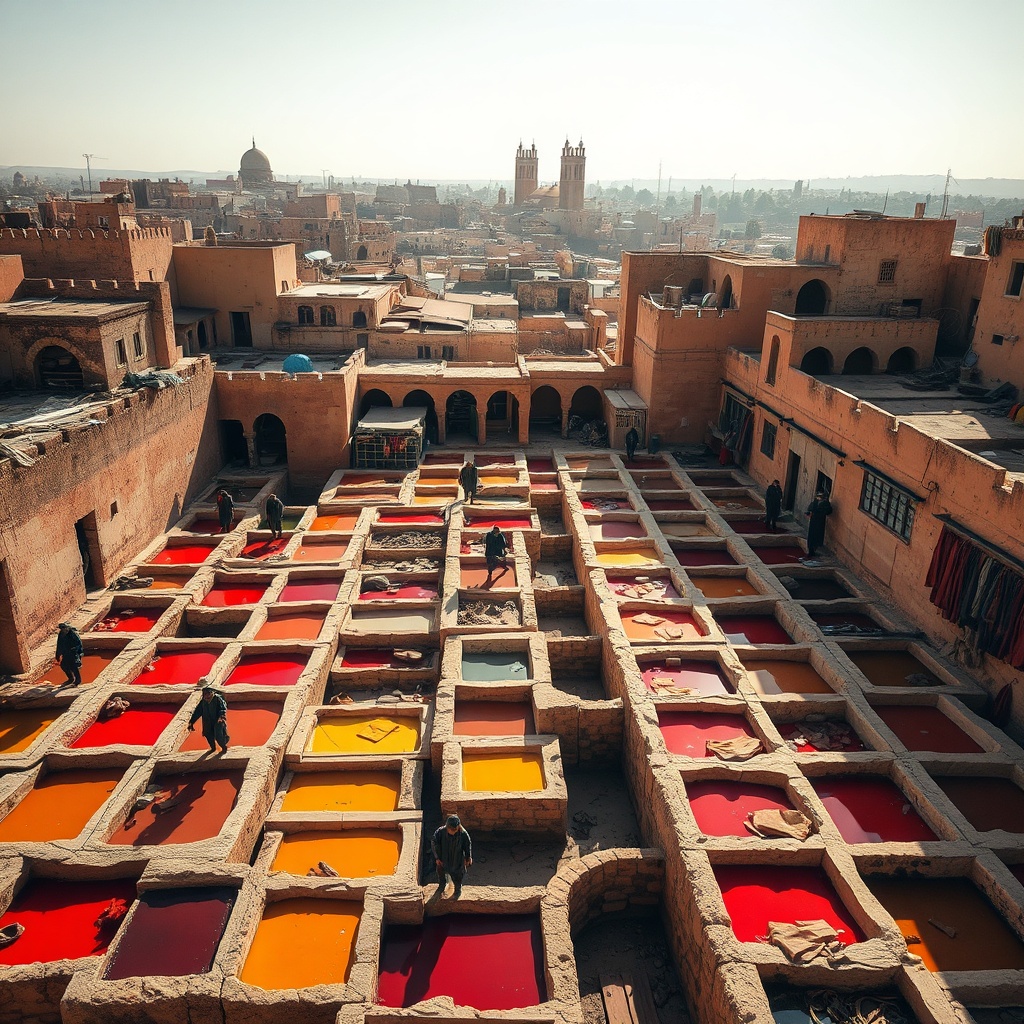
A vivid overhead view of the Chouara Tannery, showcasing the historic leather dyeing process that defines Fez Medina’s living heritage.
The Fez Medina is the oldest continuously inhabited medieval city on the planet, and unlike museum-style heritage sites, it remains a fully functional city where 156,000 residents live, work, and trade within its walls. Three pillars define its unique value: living heritage (artisans still use 14th-century techniques daily), architectural density (over 13,000 historic monuments), and sensory immersion — the tannery smells, spice markets, and echoing calls to prayer are unforgettable. The medina’s 9,500 streets form a deliberately confusing layout designed to disorient invaders, a feature that now disorients roughly 80% of first-time visitors.
Quick Answer: The Fez Medina is the world’s largest contiguous car-free urban area and the oldest continuously inhabited medieval city, founded in 789 AD. Its 940 acres contain over 13,000 historic monuments, 300+ mosques, and 40,000 registered craftsmen working in 200+ trades — a living medieval city rather than a preserved relic.
Why the Fez Medina Outranks Marrakech and Other Moroccan Medinas
- Age and authenticity: Founded in 789 AD, it predates Marrakech by nearly 200 years and retains far more original medieval fabric
- Scale: At 940 acres, it is roughly three times larger than Marrakech’s medina
- Craftsmanship: Fez is Morocco’s undisputed artisan capital, with 40,000+ registered craftsmen working in 200+ trades
- UNESCO designation: Awarded in 1981, making it one of the earliest African sites on the list
Definition: Fes el-Bali — the original walled city of Fez, distinct from Fes el-Jdid (the newer royal city built in the 13th century). Fes el-Bali contains the vast majority of the Fez Medina attractions travelers seek.
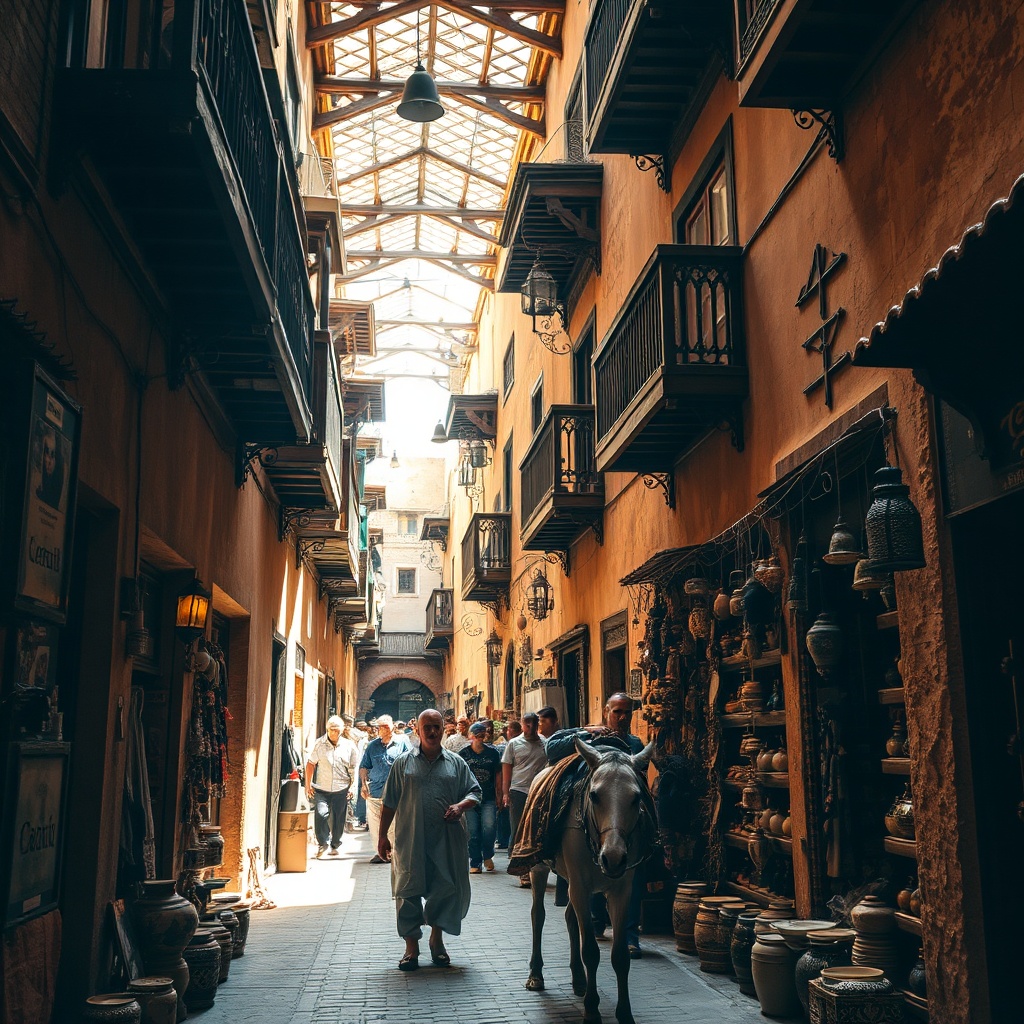
A street-level view of Fez Medina’s labyrinthine alleys, highlighting the vibrant souks and authentic medieval atmosphere that attract millions of visitors.
The Three Distinct Zones Within the Medina
- The Andalusian Quarter (south): Established by Moorish refugees from Cordoba in the 9th century, home to the famous blue-tiled Bou Inania Madrasa
- The Karaouine Quarter (north): Centered on the Al-Qarawiyyin Mosque, the world’s oldest operating university (founded 859 AD)
- The Jewish Quarter (Mellah): Dating to the 14th century, featuring the ornate Ibn Danan Synagogue and distinctive balconied architecture
The Top 10 Must-Visit Fez Medina Attractions
This ranking is based on best 10 Captivating Experiences in Fes, Morocco — verified against 2025-2026 tourism data from the Moroccan National Tourist Office.
- Chouara Tannery — The 11th-century leather pits, viewable from surrounding terrace shops; best visited before 10 AM to avoid heat and crowds
- Al-Qarawiyyin Mosque & University — Founded in 859 AD; non-Muslims can view the ornate courtyard from the entrance (interior restricted)
- Bou Inania Madrasa — The only religious building in Fez open to non-Muslim visitors; a masterpiece of Marinid architecture (1351-1357)
- Dar Batha Museum — A 19th-century palace housing 6,500+ pieces of Andalusian-Moroccan art, including the famous Fez blue pottery
- The Tannery Souk — The surrounding leather market where you can watch craftsmen use pigeon droppings and natural dyes
- Nejjarine Fountain — An intricate 18th-century ceramic fountain, one of the most photographed spots in the medina
- Attarine Madrasa — Built in 1325, renowned for its cedar wood carvings and onyx columns
- Mellah (Jewish Quarter) — Includes the 17th-century Ibn Danan Synagogue and the former royal cemetery
- Souq el-Attarine — The spice and perfume market, offering saffron, argan oil, and traditional remedies
- Bab Boujloud (Blue Gate) — The iconic 1913 entrance with its distinctive blue-and-green zellige tilework
Best Time to Visit Each Attraction
| Attraction | Best Time | Average Visit Duration | Crowd Level |
|---|---|---|---|
| Chouara Tannery | 8:00–10:00 AM | 20–30 minutes | High |
| Bou Inania Madrasa | 9:00–11:00 AM | 40–60 minutes | Moderate |
| Al-Qarawiyyin Courtyard | 11:00 AM–12:30 PM | 15 minutes | High |
| Dar Batha Museum | 2:00–4:00 PM | 60–90 minutes | Low |
| Nejjarine Fountain | Any time (evening) | 10 minutes | Low |
| Mellah | Late afternoon | 45–60 minutes | Low |
How to See the Chouara Tannery Like a Local
The tannery viewing terraces are accessed through leather shops — expect to be guided upstairs by shopkeepers. The standard « fee » is a purchase or a 10–20 dirham tip. Bring mint leaves to mask the pungent ammonia smell, and accept the sprig offered by shop staff. For the best photographs, request the highest terrace and shoot at a 45-degree angle to capture the full grid of 200+ stone pits.
Quick Answer: The Chouara Tannery, dating to the 11th century, is the oldest and largest leather tannery in the world. View it from terrace shops for a 10–20 dirham tip, visit before 10 AM, and accept the mint sprig offered by staff to mask the ammonia fumes from the 200+ stone pits.
Navigating the Labyrinth: Practical Strategies for First-Time Visitors
The medina’s 9,500 streets include dead ends, covered passages, and stairways that make GPS unreliable — Google Maps accuracy drops to approximately 40% inside the walls. Without a strategy, the average first-time visitor spends 45 minutes lost per day. Here is the navigation framework used by professional tour guides.
The Gate-to-Gate Navigation Method
- Step 1: Always enter through Bab Boujloud (Blue Gate) — the most recognizable landmark and the starting point for all major routes
- Step 2: Follow the main commercial spine (Talaa Kebira) — it runs from Bab Boujloud to the Chouara Tannery, passing the Bou Inania Madrasa and Attarine Madrasa
- Step 3: At the Attarine Madrasa, turn right for the tannery; turn left for the Al-Qarawiyyin Mosque
- Step 4: Use the 13 gates as your recovery points — every street eventually leads to a gate if you consistently walk downhill toward the outer walls
- Step 5: For the return route, take Talaa Seghira (the parallel smaller street) — it loops back to the Blue Gate via the souks
- Step 6: If lost, ask shopkeepers — not street children — for directions; shopkeepers are reliable, while children may expect payment
Hiring a Guide: Costs, Benefits, and How to Avoid Scams
Official licensed guides charge 200–300 dirhams ($20–$30 USD) for a half-day tour. The official guide office is located just inside Bab Boujloud, and licensed guides wear official badges from the Ministry of Tourism — verify this before hiring. Unlicensed « guides » (often teenagers) will approach you aggressively; politely decline and walk toward the official office. A good guide adds value through historical context, artisan introductions, and negotiating fair prices, but you are not required to make purchases at shops they recommend.
What to Wear and Carry Inside the Medina
- Footwear: Closed-toe walking shoes — the streets are uneven, slippery, and often traversed by donkeys and mules
- Clothing: Modest dress covering shoulders and knees (required for madrasa entry)
- Cash: 70% of medina shops do not accept cards; carry small denominations (10, 20, 50 dirham notes)
- Safety: Keep valuables in a front-crossbody bag; pickpocketing rates are low but not zero — the medina records roughly 300 incidents annually among 2 million visitors
Quick Answer: A licensed Fez medina guided tour costs 200–300 dirhams ($20–$30 USD) for a half day. Verify the Ministry of Tourism badge at the official guide office inside Bab Boujloud, and use the gate-to-gate method — every street leads downhill to one of the 13 gates if you stay consistent.
The Sensory Experience: Food, Crafts, and Cultural Immersion
The Fez Medina is a UNESCO-recognized « Intangible Cultural Heritage » site for its culinary traditions alone. Beyond sightseeing, the medina offers a multi-sensory journey through Moroccan gastronomy and artisan craft that has remained unchanged for centuries.
The Essential Fez Food Experiences
- B’stilla at a traditional riad: The savory-sweet pigeon pie is a Fez invention; try it at Dar Roumana or Riad Fes Maya (book 24 hours ahead)
- Street food at the Henna Souk: Grilled sardines, harira soup, and msemen pancakes for 5–15 dirhams per item
- Café Clock (Talaa Kebira): The city’s most famous café, offering camel burgers and recommended Experience Authentic Moroccan Cuisine: Cooking Class in Fes — a 2026 TripAdvisor Travelers’ Choice winner
- Mint tea ceremony: Themed tea service with traditional pastries at Palais Amani’s rooftop terrace (sunset views over the medina)
The 200+ Artisan Trades You Can Watch Live
Fez remains the center of Moroccan craftsmanship, with workshops open to visitors across the medina. Key trades to observe:
- Leather working at the Chouara complex — 1,500 workers process hides daily
- Zellige tile cutting at the tile cooperative near the Attarine Madrasa — artisans hand-chisel geometric patterns using 14th-century tools
- Metal engraving on copper and brass in the Seffarine Square, the oldest metalworking district in Morocco
- Textile weaving in the Andalusian Quarter — silk and wool looms producing the famous Fez jellabas
Navigating Souk Etiquette and Bargaining Culture
Bargaining is expected — the initial quoted price is typically 3–4 times the fair value. A fair counter-offer is 40–50% of the quoted price. Never show strong interest in an item you do not intend to buy, as shopkeepers are persistent. If you complete a purchase, the shopkeeper will often offer mint tea — accept it graciously as it signals the end of the transaction. Photography of artisans may require a small tip (5–10 dirhams).
Quick Answer: The Fez souks run on a bargaining culture where the first quoted price is 3–4 times fair value. Counter at 40–50% of the quote, carry cash (70% of shops reject cards), and tip artisans 5–10 dirhams for photography privileges.
Where to Stay and How to Plan Your Fez Medina Itinerary
Choosing the right base and itinerary structure determines whether your Fez experience is magical or overwhelming. With over 150 riads (traditional guesthouses) best Discovering Cozyriad: A Jewel in the Old Medina of Fes, accommodation choices range from budget hostels to luxury palace conversions.
Riad vs. Hotel: The Complete Comparison
| Factor | Riad (Inside Medina) | Hotel (Outside Walls) |
|---|---|---|
| Average Price (2026) | $80–$350/night | $60–$250/night |
| Atmosphere | Traditional, courtyard-centered | Modern amenities |
| Access to attractions | Walkable (5–15 min) | Requires taxi (10–15 min) |
| Noise level | Call to prayer, street sounds | Quieter, especially at night |
| Luggage access | Often requires porter assistance | Direct vehicle access |
| Best for | Immersion, couples, photographers | Families, mobility concerns |
The Optimal 2-Day Medina Itinerary
- Day 1 (Orientation): Morning — Bab Boujloud, Bou Inania Madrasa, Talaa Kebira walk to Al-Qarawiyyin. Afternoon — lunch at Café Clock, Attarine Madrasa, Chouara Tannery. Evening — rooftop dinner with medina views
- Day 2 (Deep Dive): Morning — Dar Batha Museum, Mellah and Ibn Danan Synagogue. Afternoon — Seffarine Square metalworkers, Henna Souk shopping. Evening — hammam experience at a traditional bathhouse (ask your riad for the nearest women’s/men’s hours)
Seasonal Considerations for Your Visit
- Best months: March–May and September–November (20–25°C daytime average, minimal rain)
- Summer (June–August): best Fes in the Summer – What to Expect, Things to Do & How to Get Around; visit attractions before 10 AM and after 5 PM
- Winter (December–February): Cold nights (5°C) but sunny days; fewer crowds and 20–30% lower accommodation rates
- Ramadan: Many restaurants close during daylight; schedule food experiences for sunset (iftar) hours
FAQ: Fez Medina Attractions
Is the Fez Medina safe for solo travelers and tourists?
Yes — the medina is generally safe, with violent crime rates below 1% of annual visitor incidents. The primary risks are petty theft, aggressive touts, and getting lost. Solo female travelers report feeling safe during daylight hours but should avoid empty alleys after dark and use licensed guides for evening excursions.
How much time do you need to explore the Fez Medina?
A minimum of two full days is recommended to see the major attractions without rushing. One day covers the highlights (tannery, madrasas, souks); two days allow for museums, the Mellah, artisan workshops, and a hammam experience. Three days is ideal for those interested in day trips to Volubilis or Meknes.
Can you visit the Fez Medina in one day from Marrakech?
Technically yes — the best A Comprehensive Guide to Traveling from Casablanca to Fez: Transfers, Tips, and Recommendations connects Marrakech to Fez in approximately 3.5 hours — but this leaves only 4–5 hours in the medina, which is insufficient. Most travelers allocate at least one overnight. The train costs 250–400 dirhams one-way in 2026.
Do you need a guide to visit the Fez Medina?
Not strictly, but strongly recommended for first-time visitors. The maze-like layout causes 80% of unguided visitors to get lost, and guides provide historical context that significantly enhances the experience. If you prefer independent exploration, use the gate-to-gate method described above and download offline maps.
What is the dress code for visiting religious sites in the Fez Medina?
Non-Muslim visitors can enter the Bou Inania Madrasa and the Al-Qarawiyyin courtyard (exterior only) with modest dress: shoulders and knees covered, and women should carry a scarf for head covering. The interior of the Al-Qarawiyyin Mosque is restricted to Muslims only.
Conclusion
The Fez Medina is not merely an attraction to be checked off a list — it is a complete immersion into a civilization that has preserved its identity for over twelve centuries. From the ancient tannery pits to the calligraphy-adorned madrasas, from the scent of saffron in the spice souks to the hammering of copper in Seffarine Square, Fes el-Bali rewards those who slow down and engage with its rhythms. The key to a successful visit is preparation: hire a licensed guide for orientation, dress appropriately, carry cash, and embrace the possibility of getting lost — because in the world’s largest medieval labyrinth, the detours are often the most memorable destinations. Whether you spend two days or two weeks, the Fez Medina attractions will leave an imprint that no other city in Morocco — or the world — can replicate. Book your licensed guide through your riad before arrival, and start your exploration at Bab Boujloud at 8 AM sharp.
